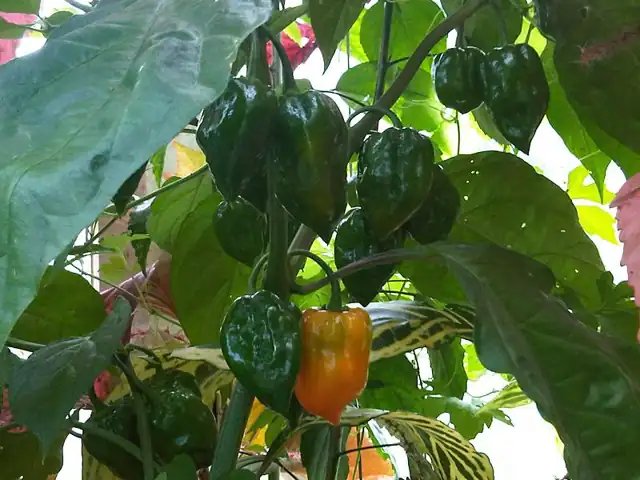
Bell Pepper
Capsicum annuum
About it
- Kind
- Vegetables · Annual
- Family
- Solanaceae
- Hardiness zones
- Zones 3–11
- Frost
- Very tender — needs warm soil and nights
- Sun
- Full sun
- Spacing
- 18 in apart, rows 30 in
- Soil depth in a pot
- At least 12 in
- Soil pH
- 6–7
- Water
- About every 7 days
When to plant
- Start indoors
- 8 weeks before planting out
- Plant out
- Plant out 2 weeks after the last frost
- Soil temperature
- Germinates from 60°F
- Ready
- About 90 days from planting out
Based on your last frost date. Outside the US, check local advice.
Varieties people grow
- Big Bertha— large elongated bell, green ripening to red
- California Wonder— the classic blocky bell; thick sweet walls
- Golden California Wonder— same blocky bell, ripens to golden yellow
- King of the North— bred for short, cool northern seasons
Planting partners
No cited companion planting notes for Bell Pepper yet.
Safety for pets and children
- Cats No information in our sources
- Dogs No information in our sources
- Horses No information in our sources
- Children No information in our sources
"No information" means our sources do not say, not that the plant is harmless. A non-toxic listing is not a reason to let anyone eat a plant.
Pests and diseases
Aphids Insect
What you'll see. Clusters of small soft-bodied insects on new growth curl and discolour leaves and leave them sticky.
What helps. Knock aphids off with a strong spray of water and pull weeds that host them. Lady beetles, lacewings and other natural enemies often bring numbers down on their own, so check again before doing more.
Source: UMN Extension ↗,UMN Extension (2) ↗
Cutworms Insect
What you'll see. Young plants are chewed through at the soil line, and the cut tops are left lying uneaten.
What helps. Put a cardboard or foil collar around each transplant, pushed a little way into the soil. Clear weeds and old plant debris where the moths lay eggs, and search the soil near a damaged plant in the evening for the curled caterpillars.
Source: UMN Extension ↗,UMN Extension (2) ↗
Tomato hornworm Insect
Manduca quinquemaculata
What you'll see. Large green caterpillars chew the leaves and can eat holes in the peppers.
What helps. Check plants twice a week in summer and pick the caterpillars off by hand. Leave any that carry small white cocoons, because the wasps inside kill hornworms.
Source: UMN Extension ↗,UMN Extension (2) ↗
Check the label and your local extension service before using any product.
Where this comes from
- family npgsweb.ars-grin.gov ↗ GRIN page: Capsicum annuum L.
- frost hardiness cmg.extension.colostate.edu ↗ CSU #720 (Colorado) very tender class lists pepper
- maturity counted from cmg.extension.colostate.edu ↗ Row's 90 days (UMN, ripe fruit) is nearest NC State (North Carolina) Table 16-4's T=75-80, far from S=145-150; CSU #720 (Colorado) counts pepper from transplant (70T). The 0024 convention names pepper as transplant-counted
- maturity counted from NC State Extension ↗ Row's 90 days (UMN, ripe fruit) is nearest NC State (North Carolina) Table 16-4's T=75-80, far from S=145-150; CSU #720 (Colorado) counts pepper from transplant (70T). The 0024 convention names pepper as transplant-counted
- min soil temp f cmg.extension.colostate.edu ↗ CSU #720 (Colorado) Table 2: pepper germination minimum 60°F
- Most facts UMN Extension ↗ Backfilled by 0041. Pre-0041 rows recorded one source for the whole row; per-field attribution was never captured and is not invented here.
- transplant weeks rel last frost cmg.extension.colostate.edu ↗ UNH (New Hampshire) table: pepper 2 weeks after last frost; CSU #720 (Colorado) very tender class: typically 2+ weeks after. Agree
- transplant weeks rel last frost extension.unh.edu ↗ UNH (New Hampshire) table: pepper 2 weeks after last frost; CSU #720 (Colorado) very tender class: typically 2+ weeks after. Agree
- water frequency days UMN Extension ↗ UMN "Growing peppers": "If the plant does not receive one inch of rain weekly, soak the soil thoroughly at least once a week." and "If your soil is sandy, it is important to water more often than once a week."