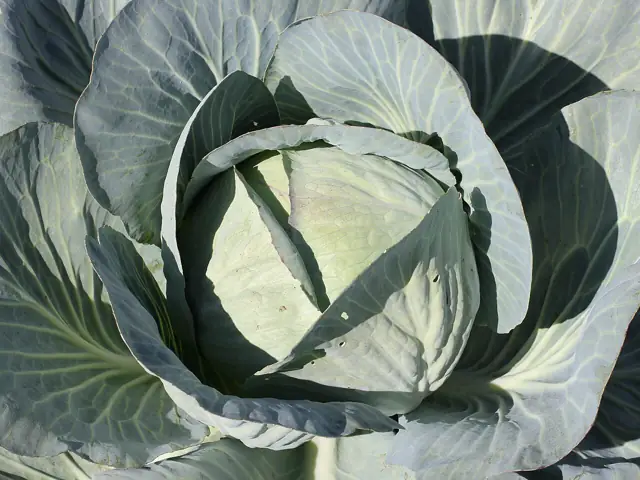
Cabbage
Brassica oleracea capitata
About it
- Kind
- Vegetables · Annual
- Family
- Brassicaceae
- Hardiness zones
- Zones 2–11
- Frost
- Hardy — takes a hard frost
- Sun
- Full sun
- Spacing
- 18 in apart, rows 24 in
- Soil depth in a pot
- At least 12 in
- Soil pH
- 6–7.5
- Water
- About every 7 days
When to plant
- Start indoors
- 6 weeks before planting out
- Plant out
- Plant out 4 weeks before the last frost
- Soil temperature
- Germinates from 40°F
- Ready
- About 90 days from planting out
- Sow again
- Every 7–14 days for a steady supply
Based on your last frost date. Outside the US, check local advice.
Varieties people grow
- Copenhagen Market— mid-season round green head
- Early Jersey Wakefield— old pointed-head cabbage; early
- Golden Acre— early round green head; small enough for a bed
- Red Acre— compact deep red cabbage
- Savoy Perfection— crinkled savoy leaves; tender for cooking
Planting partners
What has been claimed about growing Cabbage near other plants, grouped by how well it has been tested. Most companion planting advice has never been tested; the notes say which is which.
Tested in field trials
- With Marigold Marigolds planted with cabbage reduced cabbage loopers and imported cabbageworms. UMN Extension ↗
- With Nasturtium Nasturtiums planted with cabbage reduced cabbage loopers and imported cabbageworms. UMN Extension ↗
- With Onion Onions planted with cabbage reduced cabbage loopers and imported cabbageworms. UMN Extension ↗
- With Chinese Cabbage Napa cabbage grown as a trap crop beside other brassicas draws flea beetles away from them; in trials only a mix of three trap-crop species improved the protected broccoli's yield. UMN Extension ↗Europe PMC ↗
- With Mustard Greens Mustard grown as a trap crop beside other brassicas draws flea beetles away from them; in trials only a mix of three trap-crop species improved the protected broccoli's yield. UMN Extension ↗Europe PMC ↗
Mixed evidence
- With Green Onion Green onions are often planted to keep flea beetles off brassicas, but little research supports it and some contradicts it. UMN Extension ↗
- With Marigold Marigolds are often planted to keep flea beetles off brassicas, but little research supports it and some contradicts it. UMN Extension ↗
Safety for pets and children
- Cats No information in our sources
- Dogs No information in our sources
- Horses Listed as a problem for horses (NC State Extension)
- Children No information in our sources
If a pet or child eats part of this plant, call your vet or poison control.
Read from NC State Extension ↗.
"No information" means our sources do not say, not that the plant is harmless. A non-toxic listing is not a reason to let anyone eat a plant.
Pests and diseases
Aphids Insect
What you'll see. Grey, waxy cabbage aphids cluster under the leaves, on the youngest growth and inside the heads.
What helps. Knock aphids off with a strong spray of water and pull weeds that host them. Lady beetles, lacewings and other natural enemies often bring numbers down on their own, so check again before doing more.
Source: UMN Extension ↗
Cabbage caterpillars Insect
What you'll see. Green caterpillars of the imported cabbageworm, cabbage looper and diamondback moth chew holes in the leaves, and seedlings and new transplants are hurt most.
What helps. Cover young plants with floating row cover, which keeps the moths from laying eggs on them. Check the undersides of leaves and handpick caterpillars and eggs.
Source: NC State Extension ↗,UMN Extension ↗
Clubroot Disease
Plasmodiophora brassicae
What you'll see. Plants are stunted and wilt easily, leaves may yellow, and the roots swell into thick, distorted clubs.
What helps. Grow from seed or inspect transplant roots before planting, use only compost that has heated fully, and clean soil off tools. Where clubroot has appeared, grow no cabbage-family crops there for five to seven years and keep weeds out meanwhile.
Source: UMN Extension ↗,UMN Extension (2) ↗
Flea beetles Insect
What you'll see. Tiny jumping beetles chew many small round holes in the leaves, and seedlings are hurt most.
What helps. Cover young plants with row cover, and clear weeds and old crop debris where the beetles spend the winter. Sowing a little later in the season lets plants grow quickly past the worst of the feeding.
Source: UMN Extension ↗,UMN Extension (2) ↗
Check the label and your local extension service before using any product.
Where this comes from
- family npgsweb.ars-grin.gov ↗ GRIN page: Brassica oleracea L. var. capitata L.
- frost hardiness cmg.extension.colostate.edu ↗ CSU #720 (Colorado) hardy class lists cabbage
- maturity counted from cmg.extension.colostate.edu ↗ Row's 90 days is near CSU #720 (Colorado) Table 1's 85T, counted from transplant, and the 0024 convention names cabbage as transplant-counted. NC State Table 16-4's S=90-100 also matches 90, so the figure is ambiguous on its own
- min soil temp f cmg.extension.colostate.edu ↗ CSU #720 (Colorado) Table 1: cabbage germination minimum 40°F
- Most facts UMN Extension ↗ Backfilled by 0041. Pre-0041 rows recorded one source for the whole row; per-field attribution was never captured and is not invented here.
- succession interval days max WVU Extension ↗ WVU (West Virginia): seven to 14 days apart
- succession interval days min WVU Extension ↗ WVU (West Virginia): stagger plantings seven to 14 days apart; names cabbage
- toxicity NC State Extension ↗ toxic for horse from the page's "Problem for" listing. Page matched to this row by its title (Brassica oleracea Cabbage Group); not cited by the row before this batch.
- transplant weeks rel last frost extension.unh.edu ↗ UNH (New Hampshire) table: cabbage 4 weeks before last frost (a single week, so no window)
- water frequency days UMN Extension ↗ UMN "Growing cabbage": "One inch of rainfall per week is enough water." and "If your soil is sandy, it is better to water more often than once a week."