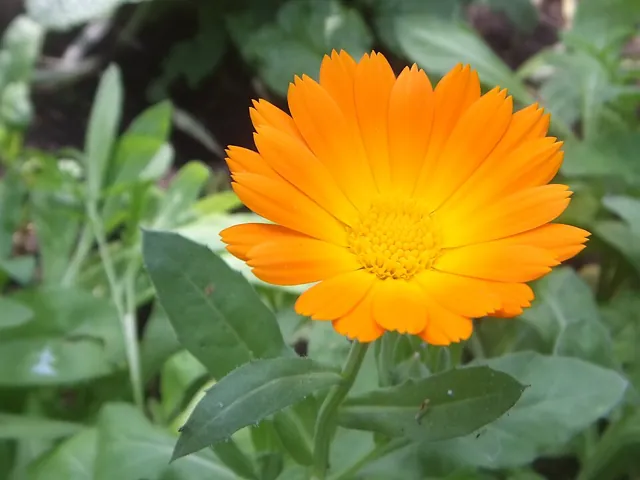
Calendula
Calendula officinalis
About it
- Kind
- Flowers · Annual
- Family
- Asteraceae
- Mature size
- to 18 in × 15 in
- Blooms
- May–Sep
- Hardiness zones
- Zones 2–11
- Sun
- Full sun
- Spacing
- 10 in apart, rows 12 in
- Soil depth in a pot
- At least 8 in
- Soil pH
- 6–7
- Water
- About every 7 days
When to plant
- Ready
- About 50 days
Based on your last frost date. Outside the US, check local advice.
Planting partners
No cited companion planting notes for Calendula yet.
Safety for pets and children
- Cats Listed as non-toxic to cats (NC State Extension)
- Dogs Listed as non-toxic to dogs (NC State Extension)
- Horses No information in our sources
- Children No information in our sources
Read from NC State Extension ↗.
"No information" means our sources do not say, not that the plant is harmless. A non-toxic listing is not a reason to let anyone eat a plant.
Pests and diseases
No pest or disease notes for Calendula yet.
Check the label and your local extension service before using any product.
Where this comes from
- family npgsweb.ars-grin.gov ↗ GRIN page: Calendula officinalis L.
- Most facts NC State Extension ↗ Backfilled by 0041. Pre-0041 rows recorded one source for the whole row; per-field attribution was never captured and is not invented here.
- toxicity NC State Extension ↗ non_toxic for cat, dog from its "non-toxic for" tags.
- water frequency days Clemson HGIC ↗ Clemson HGIC "Growing Annuals": "Most annuals need at least 1 to 1½ inches of water per week from rain or irrigation." and "Allow the soil surface to dry before watering again." This is the factsheet's general guidance for annual flowers, not a figure published for this plant.