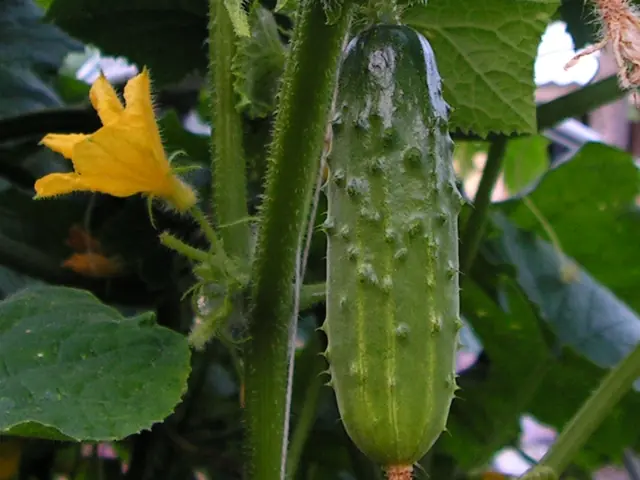
Cucumber
Cucumis sativus
About it
- Kind
- Vegetables · Annual
- Family
- Cucurbitaceae
- Hardiness zones
- Zones 3–11
- Frost
- Tender — damaged by frost
- Sun
- Full sun
- Spacing
- 12 in apart, rows 60 in
- Soil depth in a pot
- At least 8 in
- Soil pH
- 6–7
- Water
- About every 7 days
When to plant
- Start indoors
- 3 weeks before planting out
- Plant out
- Plant out 1 week after the last frost
- Sow outdoors
- Sow around the last frost
- Soil temperature
- Germinates from 60°F
- Ready
- About 55 days from sowing
- Sow again
- Every 14–21 days for a steady supply
Based on your last frost date. Outside the US, check local advice.
Varieties people grow
- Boston Pickling— old pickling variety; heavy crops of small fruit
- Lemon— round yellow heirloom; mild and never bitter
- Marketmore 76— Cornell-bred slicer with strong disease resistance
- Straight Eight— straight, even slicing cucumber; an old standard
- Suyo Long— long ribbed Asian type; burpless, takes heat
Planting partners
No cited companion planting notes for Cucumber yet.
Safety for pets and children
- Cats Listed as non-toxic to cats (NC State Extension)
- Dogs Listed as non-toxic to dogs (NC State Extension)
- Horses Listed as non-toxic to horses (NC State Extension)
- Children No information in our sources
Read from NC State Extension ↗.
"No information" means our sources do not say, not that the plant is harmless. A non-toxic listing is not a reason to let anyone eat a plant.
Pests and diseases
Powdery mildew Disease
What you'll see. White powdery spots appear on the leaves in mid to late summer and can spread until whole leaves are covered, leaving fewer and smaller fruit.
What helps. Choose resistant varieties, and give plants room and keep weeds down so air moves through the vines. Avoid heavy nitrogen feeding.
Source: UMN Extension ↗,UMN Extension (2) ↗
Striped cucumber beetle Insect
Acalymma vittatum
What you'll see. Yellow beetles with three black stripes feed on seedlings, flowers and fruit, and can spread bacterial wilt, which makes whole vines wilt and die.
What helps. Cover young plants with row cover and take it off when flowers open so bees can reach them. Clear weeds, and pull any plant that wilts from bacterial wilt before more beetles feed on it.
Source: UMN Extension ↗,UMN Extension (2) ↗
Twospotted spider mite Other problem
Tetranychus urticae
What you'll see. In hot, dry weather, tiny mites on the undersides of leaves leave them speckled, then bronzed or bleached, sometimes under fine webbing.
What helps. Keep plants well watered and mulched, because stressed plants are hit hardest. Knock mites off with a strong spray of water, which also breaks up their webbing.
Source: UMN Extension ↗,UMN Extension (2) ↗
Check the label and your local extension service before using any product.
Where this comes from
- direct sow weeks rel last frost cmg.extension.colostate.edu ↗ CSU #720 (Colorado) tender class: from seed, around the date of the average last spring frost. UNH (New Hampshire) times direct seeding by soil warming to 70°F instead
- family npgsweb.ars-grin.gov ↗ GRIN page: Cucumis sativus L.
- frost hardiness cmg.extension.colostate.edu ↗ CSU #720 (Colorado) tender class lists cucumbers
- maturity counted from cmg.extension.colostate.edu ↗ Row's 55 days equals CSU #720 (Colorado) Table 2's unmarked 55 and sits by NC State (North Carolina) Table 16-4's S=56-65, not T=28-37
- maturity counted from NC State Extension ↗ Row's 55 days equals CSU #720 (Colorado) Table 2's unmarked 55 and sits by NC State (North Carolina) Table 16-4's S=56-65, not T=28-37
- min soil temp f cmg.extension.colostate.edu ↗ CSU #720 (Colorado) Table 2 germination minimum 60°F. UNH (New Hampshire) says sow when soil warms to 70°F
- Most facts UMN Extension ↗ Backfilled by 0041. Pre-0041 rows recorded one source for the whole row; per-field attribution was never captured and is not invented here.
- succession interval days max homegarden.cahnr.uconn.edu ↗ UConn (Connecticut): another hill of cucumber seeds every 3 weeks or so
- succession interval days min extension.umd.edu ↗ UMD (Maryland): cucumbers among crops planted a portion every two weeks
- toxicity NC State Extension ↗ non_toxic for cat, dog, horse from its "non-toxic for" tags. Page matched to this row by its recorded species; not cited by the row before this batch.
- transplant weeks rel last frost extension.unh.edu ↗ UNH (New Hampshire) table: cucumber transplants 1-2 weeks after last frost. CSU #720 (Colorado) says only to delay transplants until frost potential is over, with no week
- water frequency days UMN Extension ↗ UMN "Growing cucumbers": "Cucumbers need about one inch of water from rainfall or irrigation each week during the growing season." and "Water sandy soils more often, but with lower amounts applied at any one time."