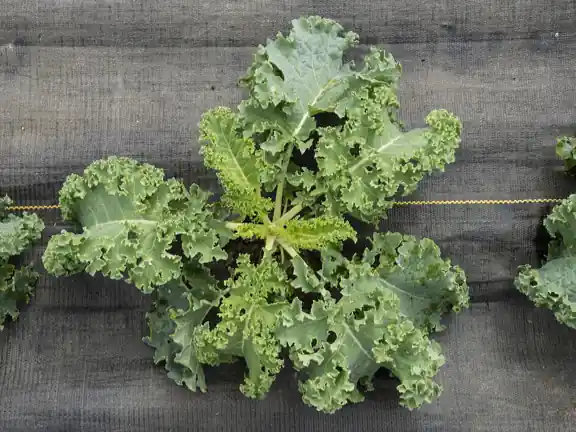
Kale
Brassica oleracea
About it
- Kind
- Vegetables · Annual
- Family
- Brassicaceae
- Hardiness zones
- Zones 2–11
- Sun
- Full sun
- Spacing
- 12 in apart, rows 18 in
- Soil depth in a pot
- At least 8 in
- Soil pH
- 6–7.5
- Water
- About every 7 days
When to plant
- Start indoors
- 6 weeks before planting out
- Plant out
- Plant out 4 weeks before the last frost
- Ready
- About 60 days from sowing
Based on your last frost date. Outside the US, check local advice.
Varieties people grow
- Dwarf Blue Curled Vates— compact curly blue-green kale; cold hardy
- Lacinato— Italian type with dark, strappy leaves
- Red Russian— flat toothed leaves on purple stems; tender
- Winterbor— tall curly blue-green kale; very cold hardy
Planting partners
What has been claimed about growing Kale near other plants, grouped by how well it has been tested. Most companion planting advice has never been tested; the notes say which is which.
Tested in field trials
- With Chinese Cabbage Napa cabbage grown as a trap crop beside other brassicas draws flea beetles away from them; in trials only a mix of three trap-crop species improved the protected broccoli's yield. UMN Extension ↗Europe PMC ↗
- With Mustard Greens Mustard grown as a trap crop beside other brassicas draws flea beetles away from them; in trials only a mix of three trap-crop species improved the protected broccoli's yield. UMN Extension ↗Europe PMC ↗
Mixed evidence
- With Green Onion Green onions are often planted to keep flea beetles off brassicas, but little research supports it and some contradicts it. UMN Extension ↗
- With Marigold Marigolds are often planted to keep flea beetles off brassicas, but little research supports it and some contradicts it. UMN Extension ↗
Safety for pets and children
- Cats No information in our sources
- Dogs No information in our sources
- Horses No information in our sources
- Children No information in our sources
"No information" means our sources do not say, not that the plant is harmless. A non-toxic listing is not a reason to let anyone eat a plant.
Pests and diseases
Aphids Insect
What you'll see. Grey, waxy cabbage aphids cluster under the leaves and on the youngest growth.
What helps. Knock aphids off with a strong spray of water and pull weeds that host them. Lady beetles, lacewings and other natural enemies often bring numbers down on their own, so check again before doing more.
Source: UMN Extension ↗,UMN Extension (2) ↗
Clubroot Disease
Plasmodiophora brassicae
What you'll see. Plants are stunted and wilt easily, leaves may yellow, and the roots swell into thick, distorted clubs.
What helps. Grow from seed or inspect transplant roots before planting, use only compost that has heated fully, and clean soil off tools. Where clubroot has appeared, grow no cabbage-family crops there for five to seven years and keep weeds out meanwhile.
Source: UMN Extension ↗
Check the label and your local extension service before using any product.
Where this comes from
- family npgsweb.ars-grin.gov ↗ GRIN page: Brassica oleracea L. (the species page; the catalogue row names no cultivar group)
- maturity counted from NC State Extension ↗ Row's 60 days (Almanac, 0024) is beyond NC State (North Carolina) Table 16-4's S=40-50 and three times T=14-22; a from-seed figure
- Most facts The Old Farmer's Almanac ↗ Backfilled by 0041. Pre-0041 rows recorded one source for the whole row; per-field attribution was never captured and is not invented here.
- transplant weeks rel last frost extension.unh.edu ↗ UNH (New Hampshire) table: kale 4 weeks before last frost (a single week, so no window)
- water frequency days NC State Extension ↗ NC State Gardener Handbook ch. 16, "Watering": "On average, vegetable gardens need 1 inch of water per week; provide only what is not supplied by rain." This is the handbook's general guidance for a vegetable garden, not a figure published for this crop.