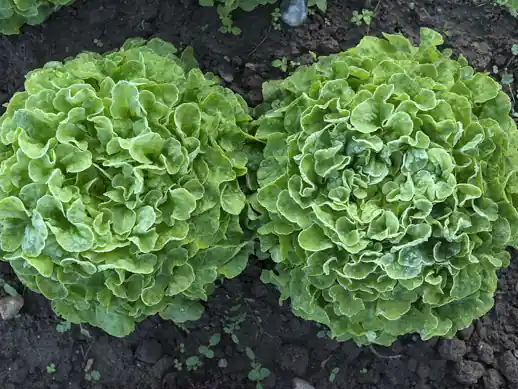
Lettuce
Lactuca sativa
About it
- Kind
- Vegetables · Annual
- Family
- Asteraceae
- Hardiness zones
- Zones 2–11
- Frost
- Hardy — takes a hard frost
- Sun
- Part shade
- Spacing
- 6 in apart, rows 12 in
- Soil depth in a pot
- At least 6 in
- Soil pH
- 6–7
- Water
- About every 7 days
When to plant
- Start indoors
- 4 weeks before planting out
- Plant out
- Plant out 4 weeks before the last frost
- Sow outdoors
- Sow 4 weeks before the last frost
- Soil temperature
- Germinates from 35°F
- Ready
- About 55 days from sowing
- Sow again
- Every 7–14 days for a steady supply
Based on your last frost date. Outside the US, check local advice.
Varieties people grow
- Black Seeded Simpson— fast, tender pale-green leaf lettuce
- Buttercrunch— small butterhead; holds up better in heat
- Parris Island Cos— dark green romaine; slow to run to seed
- Red Sails— loose leaf with bronze-red crinkled leaves
- Salad Bowl— loose leaf with lobed, apple-green leaves
Planting partners
No cited companion planting notes for Lettuce yet.
Safety for pets and children
- Cats No information in our sources
- Dogs No information in our sources
- Horses No information in our sources
- Children No information in our sources
"No information" means our sources do not say, not that the plant is harmless. A non-toxic listing is not a reason to let anyone eat a plant.
Pests and diseases
Cutworms Insect
What you'll see. Seedlings and young plants are cut off at the soil line overnight.
What helps. Clear weeds and old plant debris before planting, since the moths lay eggs there. Search the soil within a foot of a damaged plant in the evening and remove the curled caterpillars.
Source: UMN Extension ↗
Leafminers Insect
What you'll see. Winding pale tunnels appear inside the leaves where small larvae feed, spoiling leaves grown to eat.
What helps. Pick off and destroy mined leaves while the damage is small, and pull weeds such as lambsquarters. Fine netting keeps the flies off, but only in a bed that had no leafminers the year before.
Source: UMN Extension ↗
Slugs Other problem
What you'll see. Ragged holes in leaves and shiny slime trails, with damage worst on young plants in cool, damp, shady weather.
What helps. Water at the base of plants in the morning so the soil dries by evening, and remove boards, pots and debris where slugs hide. Handpick slugs at night by flashlight, or lay out boards and destroy the slugs gathered under them each morning.
Source: NC State Extension ↗,UMN Extension ↗
Check the label and your local extension service before using any product.
Where this comes from
- direct sow weeks rel last frost cmg.extension.colostate.edu ↗ CSU #720 (Colorado) hardy class, a class-wide figure: as early as 2-4 weeks before the last frost; Table 1 gives leaf lettuce no transplant age, i.e. sown direct
- family npgsweb.ars-grin.gov ↗ GRIN page: Lactuca sativa L.
- frost hardiness cmg.extension.colostate.edu ↗ CSU #720 (Colorado) hardy class lists lettuce
- maturity counted from cmg.extension.colostate.edu ↗ Row's 55 days is near CSU #720 (Colorado) Table 1's leaf lettuce 60, unmarked (not from transplant). NC State Table 16-4 is ambiguous here: leaf S=40-50, head T=45-60
- min soil temp f cmg.extension.colostate.edu ↗ CSU #720 (Colorado) Table 1: leaf lettuce germination minimum 35°F
- Most facts The Old Farmer's Almanac ↗ Backfilled by 0041. Pre-0041 rows recorded one source for the whole row; per-field attribution was never captured and is not invented here.
- succession interval days max WVU Extension ↗ WVU (West Virginia): seven to 14 days apart
- succession interval days min WVU Extension ↗ WVU (West Virginia): stagger plantings seven to 14 days apart; names lettuce
- transplant weeks rel last frost extension.unh.edu ↗ UNH (New Hampshire) table: lettuce set out 3-4 weeks before last frost; the earlier week. No window because the row also has a direct-sow week
- water frequency days UMN Extension ↗ UMN "Growing lettuce, endive and radicchio": "One inch of rainfall per week is adequate." and "If your soil is sandy, it is better to water more often than once a week." Its shallow roots are why the page stresses watering at all, not a reason it gives for watering every two days.