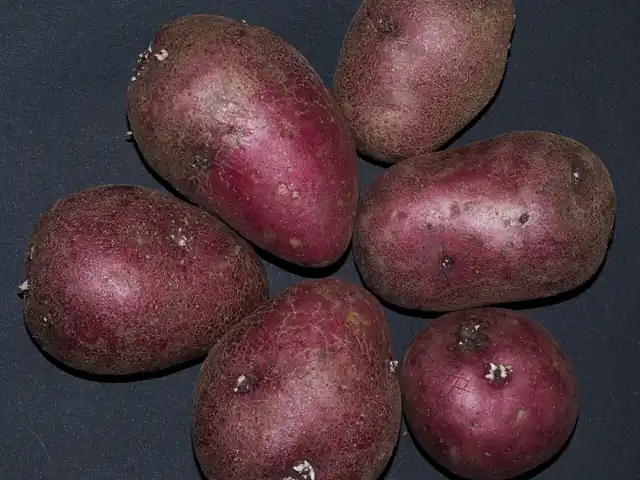
Potato
Solanum tuberosum
About it
- Kind
- Vegetables · Annual
- Family
- Solanaceae
- Frost
- Semi-hardy — takes a light frost
- Sun
- Full sun
- Spacing
- 10 in apart
- Soil depth in a pot
- At least 16 in
- Water
- About every 7 days
ⓘ We don't know this plant's soil pH, feeding needs and mature size yet.
When to plant
- Sow outdoors
- Sow 2 weeks before the last frost
- Window
- Open for about 2 weeks
- Soil temperature
- Germinates from 45°F
- Ready
- About 95 days from sowing
Based on your last frost date. Outside the US, check local advice.
Planting partners
What has been claimed about growing Potato near other plants, grouped by how well it has been tested. Most companion planting advice has never been tested; the notes say which is which.
Often said, but studies found no effect
- With Marigold Marigolds are often recommended to keep Colorado potato beetles off potatoes, but several studies found they do not. UMN Extension ↗
Safety for pets and children
- Cats Listed as a problem for cats (NC State Extension) — High severity; in the fruits, leaves, roots and stems; toxic principle: Solanine and other alkaloids
- Dogs Listed as a problem for dogs (NC State Extension) — High severity; in the fruits, leaves, roots and stems; toxic principle: Solanine and other alkaloids
- Horses Listed as a problem for horses (NC State Extension) — High severity; in the fruits, leaves, roots and stems; toxic principle: Solanine and other alkaloids
- Children Listed as a problem for children (NC State Extension) — High severity; in the fruits, leaves, roots and stems; toxic principle: Solanine and other alkaloids
If a pet or child eats part of this plant, call your vet or poison control.
Read from NC State Extension ↗.
"No information" means our sources do not say, not that the plant is harmless. A non-toxic listing is not a reason to let anyone eat a plant.
Pests and diseases
Colorado potato beetle Insect
Leptinotarsa decemlineata
What you'll see. Striped yellow-and-black beetles and their plump reddish larvae eat the leaves and can strip plants bare.
What helps. Handpick adults and larvae into soapy water and crush the orange egg clusters under the leaves, starting when adults appear in spring. Pull nightshade and ground cherry weeds, mulch between plants and clean up at the end of the season; an early-maturing variety escapes much of the summer feeding.
Source: UMN Extension ↗,UMN Extension (2) ↗
Cutworms Insect
What you'll see. Potato stems are chewed off at the soil line.
What helps. Clear weeds and old plant debris before planting, since the moths lay eggs there. Search the soil within a foot of a damaged plant in the evening and remove the curled caterpillars.
Source: UMN Extension ↗,UMN Extension (2) ↗
Early blight Disease
Alternaria tomatophila, Alternaria solani
What you'll see. Brown spots with target-like rings form on the older leaves, which yellow and die.
What helps. Water at the base to keep leaves dry, space plants for airflow and remove spotted leaves early. Do not plant potatoes where tomatoes, peppers, eggplants or potatoes grew in the last three or four years.
Source: UMN Extension ↗,UMN Extension (2) ↗
Flea beetles Insect
What you'll see. Tiny jumping beetles chew many small holes in the leaves, and unlike most flea beetles, the potato flea beetle's larvae do damage too.
What helps. Cover young plants with row cover, and clear weeds and old crop debris where the beetles spend the winter. Sowing a little later in the season lets plants grow quickly past the worst of the feeding.
Source: UMN Extension ↗
Late blight Disease
Phytophthora infestans
What you'll see. Dark brown blotches spread fast over the leaves in cool, wet weather, and tubers turn discoloured and soft.
What helps. Plant certified seed potatoes, keep leaves dry and space plants for airflow. Remove volunteer potatoes and bury or remove the plants at the end of the season.
The source is written for Minnesota, where late blight arrives in some years and not others.
Source: UMN Extension ↗,UMN Extension (2) ↗
Check the label and your local extension service before using any product.
Where this comes from
- category NC State Extension ↗ Listed in Table 16-4, "Garden Planting Calendar for Annual Vegetables, Fruits, and Herbs"
- climate requirement NC State Extension ↗ Ch. 16 lists potatoes among the cool-season annuals, which it defines as cold-hardy; the Toolbox page says they "can tolerate a bit of frost". Emerged foliage is still damaged by a hard freeze. No zones: an annual has no winter to survive (see the header)
- climate requirement NC State Extension ↗ Ch. 16 lists potatoes among the cool-season annuals, which it defines as cold-hardy; the Toolbox page says they "can tolerate a bit of frost". Emerged foliage is still damaged by a hard freeze. No zones: an annual has no winter to survive (see the header)
- days to maturity NC State Extension ↗ Table 16-4: Potatoes, Irish Tu=95-120 (from seed tubers); low end. Ch. 18's container calendar gives 100-120
- direct sow weeks rel last frost cmg.extension.colostate.edu ↗ UNH (New Hampshire) table: seed potatoes 1-2 weeks before last frost; CSU #720 (Colorado) semi-hardy class 0-2 weeks before. Agree on week -2
- direct sow weeks rel last frost extension.unh.edu ↗ UNH (New Hampshire) table: seed potatoes 1-2 weeks before last frost; CSU #720 (Colorado) semi-hardy class 0-2 weeks before. Agree on week -2
- family npgsweb.ars-grin.gov ↗ GRIN page: Solanum tuberosum L.
- frost hardiness cmg.extension.colostate.edu ↗ CSU #720 (Colorado) semi-hardy class lists potatoes
- life cycle NC State Extension ↗
- life cycle NC State Extension ↗
- maturity counted from NC State Extension ↗ The 0069 row took NC State (North Carolina) Table 16-4's Tu=95-120, counted from planting seed tubers; stored as sowing, the day they go in the ground
- min soil depth in NC State Extension ↗ Table 18-1 gives potatoes a 30-gallon minimum container and leaves the depth column blank; 16 in is the figure migration 0039 set for sweet potato on the same reasoning. Derived, not published. A group figure, as every ch. 18 depth is
- min soil temp f cmg.extension.colostate.edu ↗ CSU #720 (Colorado) Table 1: potatoes minimum soil temperature 45°F
- sow window weeks extension.unh.edu ↗ UNH (New Hampshire) 1-2 weeks before last frost: weeks -2 to -1
- space requirement NC State Extension ↗ Table 16-4 distance between plants: 10 in. The table publishes no row distance, so rows equal plants -- the square spacing of an intensive bed
- species NC State Extension ↗
- sunlight NC State Extension ↗ Toolbox Light: Full sun (6 or more hours of direct sunlight a day)
- toxicity NC State Extension ↗ toxic for cat, dog, horse, child from the page's "Problem for" listing. Severity, parts and principle are the page's poison characteristics for the whole plant.
- water frequency days UMN Extension ↗ UMN "Growing potatoes": "Soak the soil thoroughly when watering, once or twice a week." and "One inch of rainfall per week is good." Took once a week; the page says sandy soil needs water more often.