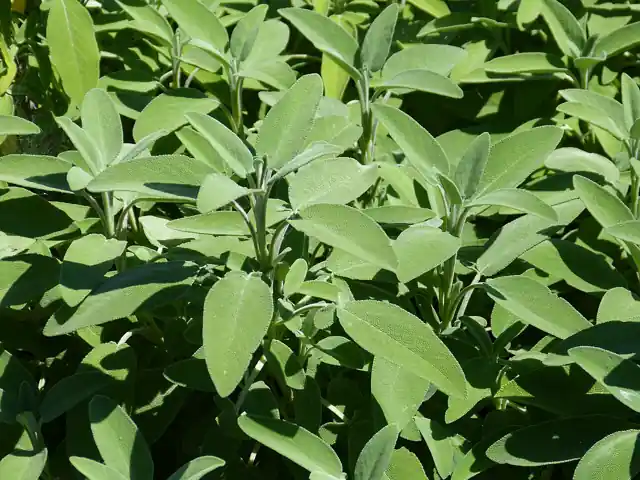
Sage
Salvia officinalis
About it
- Kind
- Herbs · Perennial
- Family
- Lamiaceae
- Mature size
- to 2 ft × 30 in
- Blooms
- Jun
- Hardiness zones
- Zones 4–8
- Sun
- Full sun
- Spacing
- 24 in apart, rows 30 in
- Soil depth in a pot
- At least 10 in
- Soil pH
- 6–7
- Water
- About every 7 days
When to plant
- Ready
- About 90 days
Based on your last frost date. Outside the US, check local advice.
Planting partners
What has been claimed about growing Sage near other plants, grouped by how well it has been tested. Most companion planting advice has never been tested; the notes say which is which.
Tested in a greenhouse or lab
- With Brussels Sprouts Sage planted with Brussels sprouts reduced diamondback moth numbers in a greenhouse study. UMN Extension ↗
Safety for pets and children
- Cats Listed as non-toxic to cats (NC State Extension)
- Dogs Listed as non-toxic to dogs (NC State Extension)
- Horses Listed as non-toxic to horses (NC State Extension)
- Children No information in our sources
Read from NC State Extension ↗.
"No information" means our sources do not say, not that the plant is harmless. A non-toxic listing is not a reason to let anyone eat a plant.
Pests and diseases
No pest or disease notes for Sage yet.
Check the label and your local extension service before using any product.
Where this comes from
- family npgsweb.ars-grin.gov ↗ GRIN page: Salvia officinalis L.
- Most facts NC State Extension ↗ Backfilled by 0041. Pre-0041 rows recorded one source for the whole row; per-field attribution was never captured and is not invented here.
- toxicity NC State Extension ↗ non_toxic for cat, dog, horse from its "non-toxic for" tags.