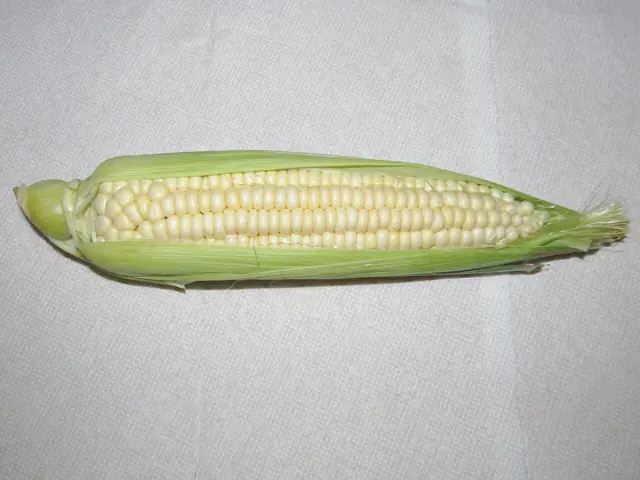
Sweet Corn
Zea mays
About it
- Kind
- Vegetables · Annual
- Family
- Poaceae
- Hardiness zones
- Zones 3–11
- Frost
- Tender — damaged by frost
- Sun
- Full sun
- Spacing
- 12 in apart, rows 36 in
- Soil depth in a pot
- At least 12 in
- Soil pH
- 5.8–7
- Water
- About every 7 days
When to plant
- Sow outdoors
- Sow around the last frost
- Soil temperature
- Germinates from 50°F
- Ready
- About 80 days from sowing
Based on your last frost date. Outside the US, check local advice.
Varieties people grow
- Ambrosia— bicolour sugar-enhanced corn; tender kernels
- Golden Bantam— old open-pollinated yellow corn; old-fashioned flavour
- Honey Select— yellow corn, very sweet and slow to lose it
- Peaches and Cream— bicolour sweet corn; a loosely used trade name
- Silver Queen— late white corn; the traditional standard
Planting partners
What has been claimed about growing Sweet Corn near other plants, grouped by how well it has been tested. Most companion planting advice has never been tested; the notes say which is which.
Tested in field trials
- With Green Beans Corn and climbing beans grown together produced more per area of land than either alone in field trials, partly because their roots feed at different depths. PubMed Central ↗
- With Pumpkin Corn, climbing beans and squash grown together produced more per area of land than each alone in field trials, partly because their roots feed at different depths. PubMed Central ↗
- With Southern Peas Cowpeas interplanted with sweet corn increased parasitism of corn earworm eggs in field trials. UMN Extension ↗Europe PMC ↗
- With Zucchini Corn, climbing beans and squash grown together produced more per area of land than each alone in field trials, partly because their roots feed at different depths. PubMed Central ↗
Traditional practice, not tested
- With Green Beans In the three sisters planting, corn stalks hold up climbing beans and the beans add nitrogen. UMN Extension ↗WSU Extension ↗
- With Pumpkin In the three sisters planting, squash leaves shade the soil around the corn and the squash is said to put raccoons off the corn. UMN Extension ↗WSU Extension ↗
- With Winter Squash In the three sisters planting, squash leaves shade the soil around the corn and the squash is said to put raccoons off the corn. UMN Extension ↗WSU Extension ↗
Safety for pets and children
- Cats No information in our sources
- Dogs No information in our sources
- Horses No information in our sources
- Children No information in our sources
"No information" means our sources do not say, not that the plant is harmless. A non-toxic listing is not a reason to let anyone eat a plant.
Pests and diseases
Common smut Disease
What you'll see. Firm, swollen, tumour-like galls grow on leaves, stems, ears or tassels.
What helps. Cut galls out through the season before they release spores, and bury them rather than composting them.
Source: UMN Extension ↗
Corn earworm Insect
What you'll see. A caterpillar feeds at the tip of the ear and leaves chewed kernels behind. Cut off the damaged tip and the rest of the ear is fine to cook.
What helps. Plant early with a variety that matures in under 80 days, so the ears are ready before the caterpillars are. Once the silks have been pollinated, ears can be covered with paper bags.
Planting dates in the sources are for Minnesota and North Carolina.
Source: NC State Extension ↗,UMN Extension ↗
European corn borer Insect
What you'll see. Caterpillars feed in the developing ears.
What helps. Plant early with a variety that matures in under 80 days. If borers damage your corn most years, expect them and plan ahead; if they rarely do, there is no need to act.
The source gives planting dates for Minnesota.
Source: UMN Extension ↗
Raccoons Other problem
What you'll see. Ripening ears are torn open and eaten, often in a single night.
What helps. An electric fence with two low strands can keep raccoons out, with weeds and grass kept clear of the wire.
Source: NC State Extension ↗,UMN Extension ↗
Sap beetles Insect
What you'll see. Small dark beetles, some with orange spots, move into ears already damaged by earworms and feed on the kernels.
What helps. Pick damaged and overripe ears promptly, and clear fallen or rotting produce from the garden so there is nothing to draw the beetles in.
Source: UMN Extension ↗
Check the label and your local extension service before using any product.
Where this comes from
- direct sow weeks rel last frost cmg.extension.colostate.edu ↗ CSU #720 (Colorado) tender class: from seed, around the date of the average last spring frost. UNH (New Hampshire) gives only a soil temperature (60°F)
- family npgsweb.ars-grin.gov ↗ GRIN page: Zea mays L.
- frost hardiness cmg.extension.colostate.edu ↗ CSU #720 (Colorado) tender class lists corn
- maturity counted from cmg.extension.colostate.edu ↗ Direct-seeded crop. Row's 80 days is inside CSU #720 (Colorado) 60-90 (unmarked); NC State (North Carolina) Table 16-4 85-90 from seed
- maturity counted from NC State Extension ↗ Direct-seeded crop. Row's 80 days is inside CSU #720 (Colorado) 60-90 (unmarked); NC State (North Carolina) Table 16-4 85-90 from seed
- min soil temp f cmg.extension.colostate.edu ↗ CSU #720 (Colorado) Table 2: corn germination minimum 50°F. UNH (New Hampshire) says sow when soil warms to 60°F
- Most facts UMN Extension ↗ Backfilled by 0041. Pre-0041 rows recorded one source for the whole row; per-field attribution was never captured and is not invented here.
- water frequency days UMN Extension ↗ UMN "Growing sweet corn": "One inch of rainfall per week is good for your corn." and "If your soil is sandy, it is better to water more often than once a week."